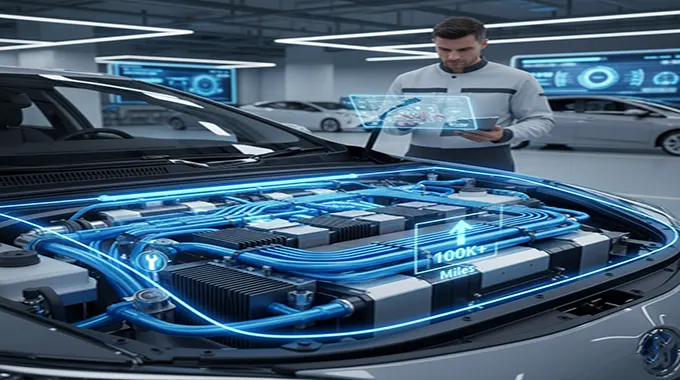
Hybrid Battery Cooling System Maintenance Tips to Extend Life Beyond 100k Miles

In 2025, hybrid vehicles are more reliable than ever, but their longevity relies on a single factor: thermal management. The high-voltage battery pack generates significant heat during the rapid charge and discharge cycles of regenerative braking and acceleration. Once your vehicle crosses 100,000 miles, the efficiency of the cooling system naturally declines due to dust and component wear.

To keep your hybrid on the road for another 100,000 miles, follow these critical cooling system maintenance tips.

1. Clean the Battery Air Intake Filter (Every 10,000 Miles)

Most hybrids (like the Toyota Prius or RAV4) feature a dedicated air intake vent, usually located near the rear seats or in the trunk area. This vent pulls cabin air to cool the battery.

  • The Problem: Pet hair, dust, and lint clog the mesh filter over time, starving the battery of air.
  • The Fix: Remove the filter cover and vacuum or use compressed air
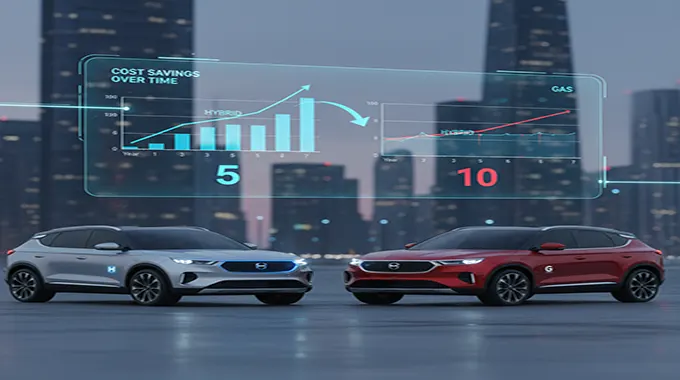
How Many Years to Break Even on a Hybrid vs Gas SUV in 2025?

For years, the “hybrid premium”—the extra cost you pay upfront for an electrified powertrain—meant it could take nearly a decade to see a return on your investment. However, in 2025, that window has shrunk significantly. Between narrower price gaps and more efficient dual-motor systems, the break-even point for a modern SUV is closer than ever.

The Upfront Cost Gap in 2025

The first part of the equation is the initial price difference. In 2025, the average price premium for a hybrid SUV over its internal combustion engine (ICE) counterpart is approximately $1,500 to $2,500.

For example, a 2025 Toyota RAV4 Hybrid starts roughly $1,650 higher than the base gas model when equipped with similar All-Wheel Drive (AWD) features. Other manufacturers, like Honda and Hyundai, have even narrower gaps as they move toward making hybrid powertrains the “standard” for their mid-to-high trim levels.

The Fuel Savings Math

To calculate the …

Understanding the Importance of Car Workshop Manuals for Vehicle Maintenance

When it comes to maintaining and repairing cars, many owners are not fully aware of the importance and utility of the car workshop manual. This lack of awareness can lead to misconceptions and missed opportunities in taking the best care of their vehicles. The significance of car workshop manuals goes beyond the basic instructions found in a typical owner’s manual, offering a comprehensive guide to every aspect of a car’s functionality and maintenance.

The owner’s manual that accompanies a car at the time of purchase primarily covers basic setup, features, and emergency procedures like changing a flat tire. In contrast, a car workshop manual, also known as a factory service manual, delves much deeper. It provides detailed information about the entire structure of the car, including every component, from screws to gauges, and guidelines for the maintenance and repair of the vehicle. These manuals are specific to the make and …

Advantages of All-Wheel Drive Electric Cars versus Front-Wheel Drive Models

Electric cars represent an innovative breakthrough in automotive technology, providing drivers with numerous benefits such as noise-free operation, zero emissions, and reduced maintenance costs. Additionally, with the introduction of all-wheel drive (AWD) technology in electric vehicles, drivers can now experience improved performance, handling, and safety, especially in challenging driving conditions. In this article, we explore the advantages of AWD electric cars compared to their front-wheel drive (FWD) counterparts.

Improved Traction and Stability

The key advantage of AWD technology is its ability to provide better traction and stability, especially in adverse weather conditions. An AWD electric vehicle distributes power to all four wheels, ensuring better grip on the road and reducing the risk of slipping or sliding in slippery conditions. This feature is particularly helpful for drivers who frequently face snow, ice, or rain on their daily commute.

Enhanced Acceleration and Performance

AWD electric cars offer better acceleration and performance compared …

Emerging Types of Electric Cars with Innovative Charging Solutions

As the demand for electric vehicles continues to surge, automakers and technology companies are exploring innovative charging solutions to address the range anxiety and infrastructure challenges associated with electric cars. In response to this, several emerging types of electric cars with revolutionary charging capabilities are making waves in the automotive industry. Here, we delve into some of these emerging electric car types and their cutting-edge charging solutions.

Wireless Charging Electric Cars

One of the most promising innovations in the electric car space is the development of wireless charging technology. This approach eliminates the need for physical connectors and plugs, allowing electric vehicles to charge by simply parking over a designated charging pad. This breakthrough has the potential to revolutionize the convenience and accessibility of charging, making it more seamless and hassle-free for electric car owners.

Solar-Powered Electric Cars

Solar-powered electric cars integrate photovoltaic panels into the vehicle’s design, allowing them …